
[et_pb_section fb_built=”1″ _builder_version=”4.16″ custom_padding=”18px||35px||false|” global_colors_info=”{}”][et_pb_row column_structure=”1_2,1_2″ _builder_version=”4.16″ global_colors_info=”{}”][et_pb_column type=”1_2″ _builder_version=”4.16″ custom_padding=”|||” global_colors_info=”{}” custom_padding__hover=”|||”][et_pb_divider color=”#ed4441″ divider_position=”center” divider_weight=”3px” disabled_on=”off|off|off” _builder_version=”4.16″ max_width=”150px” height=”false” animation_style=”slide” animation_direction=”top” animation_delay=”100ms” animation_intensity_slide=”10%” global_colors_info=”{}”][/et_pb_divider][et_pb_text admin_label=”Discover Beatuty Text” _builder_version=”4.16″ text_font=”Roboto||||” text_font_size=”16px” text_line_height=”1.9em” custom_padding=”14px|||||” animation_style=”slide” animation_direction=”top” animation_delay=”200ms” animation_intensity_slide=”10%” inline_fonts=”Freckle Face” global_colors_info=”{}”]
[/et_pb_text][et_pb_image src=”https://fizyka.wmfi.uni.opole.pl/wp-content/uploads/obserwatorium.jpg” title_text=”obserwatorium” force_fullwidth=”on” align_tablet=”center” align_phone=”” align_last_edited=”on|desktop” _builder_version=”4.16″ custom_margin=”45px||45px||true|” animation_style=”fold” animation_direction=”left” animation_intensity_fold=”20%” animation=”fade_in” global_colors_info=”{}”][/et_pb_image][/et_pb_column][et_pb_column type=”1_2″ _builder_version=”4.16″ custom_padding=”|||” global_colors_info=”{}” custom_padding__hover=”|||”][et_pb_image src=”https://fizyka.wmfi.uni.opole.pl/wp-content/uploads/sliderCI2s.jpg” title_text=”sliderCI2s” force_fullwidth=”on” align_tablet=”center” align_phone=”” align_last_edited=”on|desktop” _builder_version=”4.16″ min_height=”403px” custom_margin=”13px||13px||true|” animation_style=”fold” animation_direction=”right” animation_intensity_fold=”20%” animation=”fade_in” global_colors_info=”{}”][/et_pb_image][et_pb_text admin_label=”Discover Beatuty Title” _builder_version=”4.16″ text_font=”||||” text_text_color=”#1a1a1a” header_font=”Oswald|on||on|” header_text_align=”right” header_font_size=”60px” header_line_height=”1.3em” custom_margin=”40px|||||” animation_style=”slide” animation_direction=”top” animation_intensity_slide=”10%” global_colors_info=”{}”]
Obserwatorium Astronomiczne działa w ramach Instytutu
Fizyki. Patronem obserwatorium jest
profesor Theodor Kaluza.
Położenie geograficzne obserwatorium
50° 40′ 21″ N
17° 56′ 01″ E
206m n.p.m.
Adres Obserwatorium:
Dom Studenta „Niechcic”
ul. Katowicka 87b
XII piętro
Kontakt:
mgr Andrzej Czaiński
telefon: (077) 452 72 68
email: astro@uni.opole.pl
[/et_pb_text][/et_pb_column][/et_pb_row][/et_pb_section][et_pb_section fb_built=”1″ _builder_version=”4.16″ background_color=”#f4f4f4″ custom_padding=”68px||56px|||” global_colors_info=”{}”][et_pb_row column_structure=”1_4,1_4,1_4,1_4″ use_custom_gutter=”on” gutter_width=”1″ make_equal=”on” admin_label=”Gallery” module_class=” et_pb_row_fullwidth” _builder_version=”4.16″ width=”100%” width_tablet=”100%” width_phone=”” width_last_edited=”on|desktop” max_width=”100%” max_width_tablet=”100%” max_width_phone=”” max_width_last_edited=”on|desktop” custom_padding=”|||” make_fullwidth=”on” global_colors_info=”{}”][et_pb_column type=”1_4″ _builder_version=”4.16″ custom_padding=”|||” global_colors_info=”{}” custom_padding__hover=”|||”][et_pb_image src=”https://fizyka.wmfi.uni.opole.pl/wp-content/uploads/ksiezyc00-scaled.jpg” title_text=”rbsh” show_in_lightbox=”on” force_fullwidth=”on” align_tablet=”center” align_phone=”” align_last_edited=”on|desktop” _builder_version=”4.16″ animation_style=”zoom” animation_intensity_zoom=”10%” global_colors_info=”{}”][/et_pb_image][/et_pb_column][et_pb_column type=”1_4″ _builder_version=”4.16″ custom_padding=”|||” global_colors_info=”{}” custom_padding__hover=”|||”][et_pb_image src=”https://fizyka.wmfi.uni.opole.pl/wp-content/uploads/ksiezyc2-scaled.jpg” title_text=”mde” show_in_lightbox=”on” force_fullwidth=”on” align_tablet=”center” align_phone=”” align_last_edited=”on|desktop” _builder_version=”4.16″ animation_style=”zoom” animation_delay=”100ms” animation_intensity_zoom=”10%” locked=”off” global_colors_info=”{}”][/et_pb_image][/et_pb_column][et_pb_column type=”1_4″ _builder_version=”4.16″ custom_padding=”|||” global_colors_info=”{}” custom_padding__hover=”|||”][et_pb_image src=”https://fizyka.wmfi.uni.opole.pl/wp-content/uploads/ksiezyc1-scaled.jpg” title_text=”rhdr” show_in_lightbox=”on” force_fullwidth=”on” align_tablet=”center” align_phone=”” align_last_edited=”on|desktop” _builder_version=”4.16″ animation_style=”zoom” animation_delay=”200ms” animation_intensity_zoom=”10%” locked=”off” global_colors_info=”{}”][/et_pb_image][/et_pb_column][et_pb_column type=”1_4″ _builder_version=”4.16″ custom_padding=”|||” global_colors_info=”{}” custom_padding__hover=”|||”][et_pb_image src=”https://fizyka.wmfi.uni.opole.pl/wp-content/uploads/ksiezyc0-scaled.jpg” title_text=”rhdr” show_in_lightbox=”on” force_fullwidth=”on” align_tablet=”center” align_phone=”” align_last_edited=”on|desktop” _builder_version=”4.16″ animation_style=”zoom” animation_delay=”300ms” animation_intensity_zoom=”10%” locked=”off” global_colors_info=”{}”][/et_pb_image][/et_pb_column][/et_pb_row][/et_pb_section][et_pb_section fb_built=”1″ admin_label=”Video” _builder_version=”4.16″ parallax=”on” custom_padding=”13px||19px|||” global_colors_info=”{}”][et_pb_row _builder_version=”4.16″ background_color=”#f4f4f4″ min_height=”98px” locked=”off” global_colors_info=”{}”][et_pb_column type=”4_4″ _builder_version=”4.16″ custom_padding=”|||” global_colors_info=”{}” custom_padding__hover=”|||”][et_pb_text admin_label=”Video Sub Title” _builder_version=”4.16″ text_font=”Roboto||||” text_text_color=”#1a1a1a” text_font_size=”24px” text_line_height=”1.4em” text_orientation=”center” max_width=”800px” module_alignment=”center” custom_margin=”|||” custom_padding=”14px|||||” animation_style=”slide” animation_direction=”top” animation_delay=”200ms” animation_intensity_slide=”10%” locked=”off” global_colors_info=”{}”]
Ostatnio zaobserwowane
[/et_pb_text][et_pb_divider color=”#ed4441″ divider_position=”center” divider_weight=”3px” disabled_on=”off|off|off” _builder_version=”4.16″ max_width=”150px” module_alignment=”center” height=”false” custom_margin=”30px|||” animation_style=”slide” animation_direction=”top” animation_delay=”100ms” animation_intensity_slide=”10%” locked=”off” global_colors_info=”{}”][/et_pb_divider][/et_pb_column][/et_pb_row][et_pb_row _builder_version=”4.16″ custom_margin=”|auto|28px|128px||” custom_padding=”11px|||||” global_colors_info=”{}”][et_pb_column type=”4_4″ _builder_version=”4.16″ global_colors_info=”{}”][et_pb_text _builder_version=”4.20.0″ _module_preset=”default” hover_enabled=”0″ global_colors_info=”{}” sticky_enabled=”0″]
[/et_pb_text][et_pb_image src=”https://fizyka.wmfi.uni.opole.pl/wp-content/uploads/IMG_1505-scaled.jpg” _builder_version=”4.20.0″ _module_preset=”default” title_text=”IMG_1505″ hover_enabled=”0″ sticky_enabled=”0″][/et_pb_image][et_pb_text _builder_version=”4.16″ _module_preset=”default” global_colors_info=”{}”]
[/et_pb_text][et_pb_image src=”https://fizyka.wmfi.uni.opole.pl/wp-content/uploads/IMG_1392-scaled.jpg” title_text=”IMG_1392″ _builder_version=”4.20.0″ _module_preset=”default” global_colors_info=”{}”][/et_pb_image][et_pb_text _builder_version=”4.16″ _module_preset=”default” global_colors_info=”{}”]
[/et_pb_text][et_pb_image src=”https://fizyka.wmfi.uni.opole.pl/wp-content/uploads/20210909_200716-scaled.jpg” title_text=”20210909_200716″ _builder_version=”4.16″ _module_preset=”default” global_colors_info=”{}”][/et_pb_image][et_pb_image src=”https://fizyka.wmfi.uni.opole.pl/wp-content/uploads/20210909_200601-scaled.jpg” title_text=”20210909_200601″ _builder_version=”4.16″ _module_preset=”default” global_colors_info=”{}”][/et_pb_image][et_pb_image src=”https://fizyka.wmfi.uni.opole.pl/wp-content/uploads/20210909_200648-scaled.jpg” title_text=”20210909_200648″ _builder_version=”4.16″ _module_preset=”default” global_colors_info=”{}”][/et_pb_image][et_pb_text _builder_version=”4.16″ _module_preset=”default” global_colors_info=”{}”]
[/et_pb_text][et_pb_image src=”https://fizyka.wmfi.uni.opole.pl/wp-content/uploads/20210909_191450-scaled.jpg” title_text=”20210909_191450″ _builder_version=”4.16″ _module_preset=”default” global_colors_info=”{}”][/et_pb_image][et_pb_text _builder_version=”4.16″ _module_preset=”default” global_colors_info=”{}”]
[/et_pb_text][et_pb_image src=”https://fizyka.wmfi.uni.opole.pl/wp-content/uploads/IMG_0687-scaled.jpg” title_text=”IMG_0687″ _builder_version=”4.16″ _module_preset=”default” global_colors_info=”{}”][/et_pb_image][et_pb_image src=”https://fizyka.wmfi.uni.opole.pl/wp-content/uploads/IMG_0711-scaled.jpg” title_text=”IMG_0711″ _builder_version=”4.16″ _module_preset=”default” global_colors_info=”{}”][/et_pb_image][et_pb_text _builder_version=”4.16″ custom_margin=”||7px|||” global_colors_info=”{}”]
[/et_pb_text][et_pb_image src=”https://fizyka.wmfi.uni.opole.pl/wp-content/uploads/koniunkcja0.jpg” title_text=”koniunkcja0″ _builder_version=”4.16″ global_colors_info=”{}”][/et_pb_image][et_pb_image src=”https://fizyka.wmfi.uni.opole.pl/wp-content/uploads/koniunkcja1.jpg” title_text=”koniunkcja1″ _builder_version=”4.16″ global_colors_info=”{}”][/et_pb_image][et_pb_text _builder_version=”4.16″ custom_margin=”||7px|||” global_colors_info=”{}”]
[/et_pb_text][et_pb_image src=”https://fizyka.wmfi.uni.opole.pl/wp-content/uploads/kometa02-scaled.jpg” title_text=”kometa02″ _builder_version=”4.16″ global_colors_info=”{}”][/et_pb_image][et_pb_image src=”https://fizyka.wmfi.uni.opole.pl/wp-content/uploads/kometa03.jpg” title_text=”bsh” _builder_version=”4.16″ global_colors_info=”{}”][/et_pb_image][et_pb_text _builder_version=”4.16″ custom_margin=”||7px|||” global_colors_info=”{}”]
[/et_pb_text][et_pb_image src=”https://fizyka.wmfi.uni.opole.pl/wp-content/uploads/wenusmercury-scaled.jpg” title_text=”wenusmercury” _builder_version=”4.16″ global_colors_info=”{}”][/et_pb_image][et_pb_text _builder_version=”4.16″ custom_margin=”||11px|||” global_colors_info=”{}”]
[/et_pb_text][et_pb_image src=”https://fizyka.wmfi.uni.opole.pl/wp-content/uploads/sleza0-scaled.jpg” title_text=”sleza0″ _builder_version=”4.16″ custom_margin=”-8px|||||” global_colors_info=”{}”][/et_pb_image][et_pb_text _builder_version=”4.16″ custom_margin=”||1px|||” global_colors_info=”{}”]
[/et_pb_text][et_pb_image src=”https://fizyka.wmfi.uni.opole.pl/wp-content/uploads/starling-scaled.jpg” title_text=”starling” _builder_version=”4.16″ global_colors_info=”{}”][/et_pb_image][/et_pb_column][/et_pb_row][et_pb_row _builder_version=”4.16″ background_color=”#f4f4f4″ min_height=”98px” locked=”off” global_colors_info=”{}”][et_pb_column type=”4_4″ _builder_version=”4.16″ custom_padding=”|||” global_colors_info=”{}” custom_padding__hover=”|||”][et_pb_text admin_label=”Video Sub Title” _builder_version=”4.16″ text_font=”Roboto||||” text_text_color=”#1a1a1a” text_font_size=”24px” text_line_height=”1.4em” text_orientation=”center” max_width=”800px” module_alignment=”center” custom_margin=”|||” custom_padding=”14px|||||” animation_style=”slide” animation_direction=”top” animation_delay=”200ms” animation_intensity_slide=”10%” locked=”off” global_colors_info=”{}”]
Wydarzenia
[/et_pb_text][et_pb_divider color=”#ed4441″ divider_position=”center” divider_weight=”3px” disabled_on=”off|off|off” _builder_version=”4.16″ max_width=”150px” module_alignment=”center” height=”false” custom_margin=”30px|||” animation_style=”slide” animation_direction=”top” animation_delay=”100ms” animation_intensity_slide=”10%” locked=”off” global_colors_info=”{}”][/et_pb_divider][/et_pb_column][/et_pb_row][/et_pb_section][et_pb_section fb_built=”1″ _builder_version=”4.16″ custom_padding=”10px||110px|||” global_colors_info=”{}”][et_pb_row column_structure=”1_2,1_2″ _builder_version=”4.16″ custom_margin=”|auto|28px|129px||” custom_padding=”16px|||||” global_colors_info=”{}”][et_pb_column type=”1_2″ _builder_version=”4.16″ global_colors_info=”{}”][et_pb_text _builder_version=”4.16″ global_colors_info=”{}”]
Instytut Fizyki Uniwersytetu Opolskiego wraz z Wirtualną Akademią Astronomii zorganizowali obserwacje niecodziennego zjawiska astronomicznego przejścia Merkurego na tle tarczy Słońca.
W dniu 11 listopada 2019 r. w godzinach 13:25-16:00 w Obserwatorium Astronomicznym Instytutu Fizyki UO na XII piętrze Domu Studenta Niechcic (ul. Katowicka 87B – windą na XI i piętro po schodach na XII).
Odbył się również wykład Piotra Książka (studenta Wirtualnej Akademii Astronomii i AGH w Krakowie) p.t. „O Merkurym i orbitach słów kilka”.
Obserwacje prowadzone były przez Andrzeja Czaińskiego i Katarzynę Książek przy wsparciu Koła Naukowego Fizyków.
Poprzednie przejście Merkurego przez tarczę Słońca obserwowaliśmy wspólnie 9 maja 2016 r., następne wystąpi dopiero w 2032 r.
Całe zjawisko widoczne będzie w Ameryce Południowej, na południowo-wschodnim Pacyfiku, na Atlantyku, na północno-zachodnim wybrzeżu Afryki oraz na Antarktydzie.
[/et_pb_text][et_pb_text _builder_version=”4.16″ global_colors_info=”{}”]
[/et_pb_text][et_pb_text _builder_version=”4.16″ global_colors_info=”{}”]
[/et_pb_text][/et_pb_column][et_pb_column type=”1_2″ _builder_version=”4.16″ custom_padding=”|||” global_colors_info=”{}” custom_padding__hover=”|||”][et_pb_text _builder_version=”4.16″ global_colors_info=”{}”]
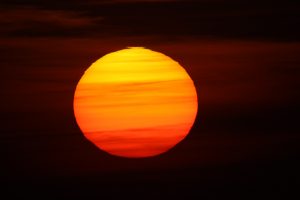
Odbyły się obserwacje Słońca miedzy godz. 11:00 a 14:00
[/et_pb_text][et_pb_text _builder_version=”4.16″ global_colors_info=”{}”]
[/et_pb_text][/et_pb_column][/et_pb_row][et_pb_row _builder_version=”4.16″ background_color=”#f4f4f4″ custom_padding=”13px||13px||true|” locked=”off” global_colors_info=”{}”][et_pb_column type=”4_4″ _builder_version=”4.16″ custom_padding=”|||” global_colors_info=”{}” custom_padding__hover=”|||”][et_pb_text admin_label=”Video Sub Title” _builder_version=”4.16″ text_font=”Roboto||||” text_text_color=”#1a1a1a” text_font_size=”24px” text_line_height=”1.4em” text_orientation=”center” max_width=”800px” module_alignment=”center” custom_margin=”|||” custom_padding=”14px|||||” animation_style=”slide” animation_direction=”top” animation_delay=”200ms” animation_intensity_slide=”10%” locked=”off” global_colors_info=”{}”]
Astronomia w sieci
[/et_pb_text][et_pb_divider color=”#ed4441″ divider_position=”center” divider_weight=”3px” disabled_on=”off|off|off” _builder_version=”4.16″ max_width=”150px” module_alignment=”center” height=”false” custom_margin=”30px|||” animation_style=”slide” animation_direction=”top” animation_delay=”100ms” animation_intensity_slide=”10%” locked=”off” global_colors_info=”{}”][/et_pb_divider][/et_pb_column][/et_pb_row][et_pb_row column_structure=”1_2,1_2″ _builder_version=”4.16″ custom_margin=”|73px||auto||” custom_padding=”|||0px||” global_colors_info=”{}”][et_pb_column type=”1_2″ _builder_version=”4.16″ custom_padding=”|||” global_colors_info=”{}” custom_padding__hover=”|||”][et_pb_text _builder_version=”4.16″ width=”100%” custom_padding=”|||5px||” global_colors_info=”{}”]
Dane astronomiczne i bazy abstraktów
ADS – Astrophysical Data System
NED – NASA/IPAC Extragalactic Database
Słońce
Bass2000 – aktualne zdjęcia Słońca z obserwatoriów naziemnych
SOHO – aktualne zdjęcia Słońca z satelity SOHO
STEREO – aktualne zdjęcia Słońca z satelitów STEREO
Portale astronomiczne
Galerie
APOD – Astronomy Picture Of the Day (Astronomiczne zdjęcie dnia)
HubbleSite – galeria teleskopu Hubble’a
ESO – Europejskie Obserwatorium Południowe
NASA – Narodowa Agencja Aeronautyki i Przestrzeni Kosmicznej (USA)
NOAO – National Optical Astronomy Observatory (USA)
[/et_pb_text][/et_pb_column][et_pb_column type=”1_2″ _builder_version=”4.16″ custom_padding=”|||” global_colors_info=”{}” custom_padding__hover=”|||”][et_pb_text _builder_version=”4.16″ global_colors_info=”{}”]
Stowarzyszenia astronomiczne
Polskie Towarzystwo Astronomiczne
Polskie Towarzystwo Miłośników Astronomii
Międzynarodowa Unia Astronomiczna
Inne
Informacja meteo
Numeryczna prognoza pogody ICM
SAT24 – aktualne zdjęcia satelitarne – EUMETSAT
NOAA – CHMI – aktualne zdjęcia satelitarne – NOAA
NOAA – UNIBE – aktualne zdjęcia satelitarne – NOAA
Lotnicze prognozy obszarowe IMGW
[/et_pb_text][/et_pb_column][/et_pb_row][/et_pb_section]